At a glance
- Duration:
- 8 Days
- Start/End:
- Milwaukee to Toronto
- From:
- $6,295
- Time of Year:
- April - September

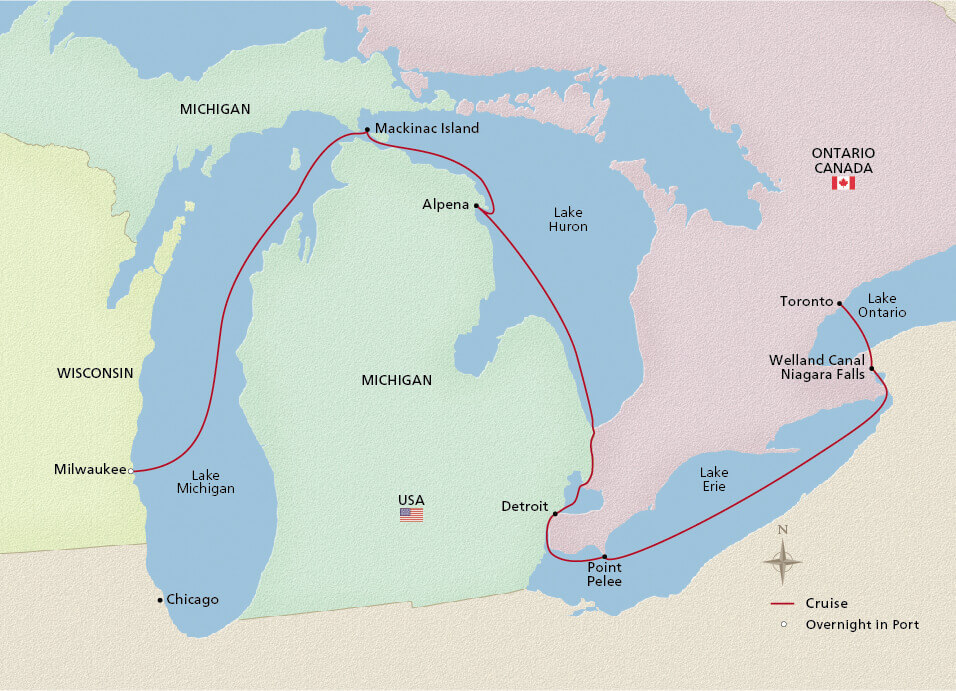
Embark on an unforgettable 8-day Niagara & the Great Lakes voyage aboard the state-of-the-art Viking Octantis, sailing between Toronto, Ontario and Milwaukee, Wisconsin. This journey seamlessly blends awe-inspiring natural wonders with rich cultural experiences, offering a true exploration of North America’s inland seas.
Cruise through striking waterways framed by both modern skylines and untouched wilderness, where every day reveals a new perspective of the Great Lakes. Witness the thundering majesty of Niagara Falls, a highlight of the journey, and step into the story of the region’s legendary shipping heritage. At Point Pelee, a sanctuary for migratory birds, nature lovers will find unmatched opportunities for birdwatching and ecological discovery.
Guided by Viking’s renowned Expedition Team of naturalists, historians, and scientists, venture deeper into the landscapes that few travelers ever see. Board expedition craft to explore sheltered bays, uninhabited islands, and old-growth woodlands, uncovering fragile ecosystems and hidden natural treasures.
Onboard, the Viking Octantis elevates the expedition experience with elegant Scandinavian design, innovative science labs, and luxurious comforts. Whether enjoying enriching lectures, fine regional cuisine, or quiet moments on deck watching the lakes’ horizons unfold, you’ll find this journey as rewarding as it is inspiring.
This is more than a cruise, it’s an expedition into the heart of the Great Lakes, where culture, history, and wilderness converge in a voyage you’ll never forget.
Great Lakes Cruise Highlights
- Navigate the engineering marvel of the Welland Canal before arriving at the majestic Horseshoe Falls of Niagara Falls, offering up-close views of this iconic natural wonder.
- Explore Canada’s southernmost mainland point, Point Pelee, Ontario, famed for its spectacular migration of birds and butterflies at Point Pelee National Park.
- In Detroit, visit the legendary Henry Ford Museum, home to captivating Americana displays including JFK’s limousine.
- Discover the maritime legacy at the Great Lakes Maritime Heritage Center in Alpena, Michigan and enjoy kayaking above historic shipwrecks in Thunder Bay.
- Step back in time on the car-free Mackinac Island via carriage, bicycle, or on foot, and kayak along its scenic shoreline.
Niagara & the Great Lakes Details
Day-to-Day Itinerary
Day 1: Toronto, Ontario
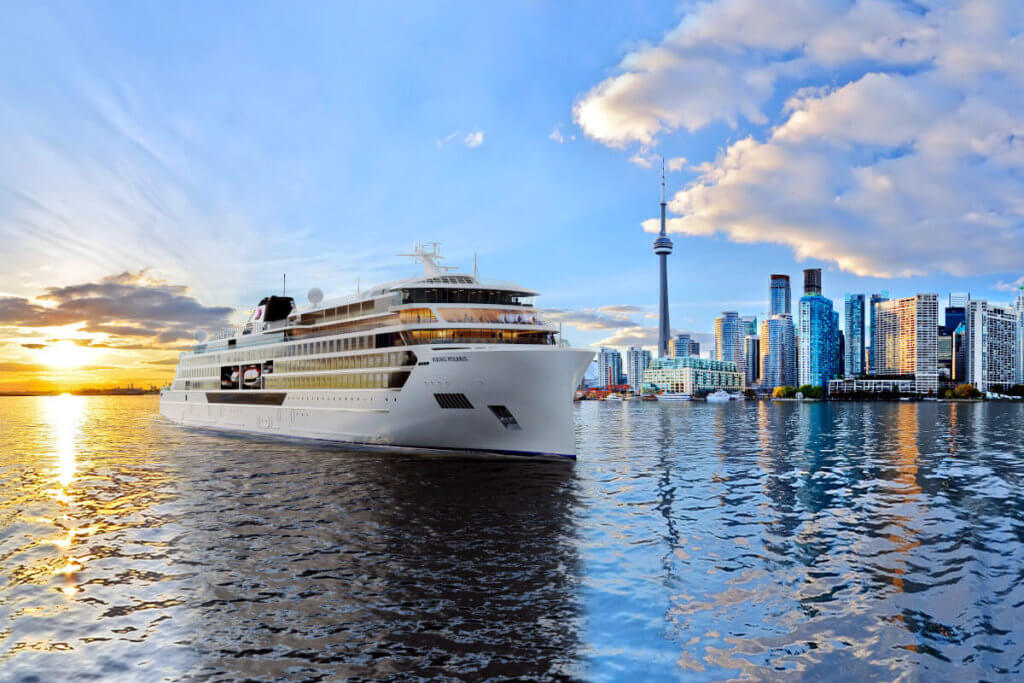
Embark your ship and settle into your stateroom. Toronto is beloved by many as one of Canada’s boldest and most innovative capitals. Hugging the shores of Lake Ontario and facing the picturesque Toronto Islands, it was founded by British loyalists fleeing the American Revolution in 1793. Today the city is a pleasure to explore on foot, whether strolling past the Victorian bay-and-gable homes of Rosedale, or the historic enclave of Wychwood Park, an Ontario Heritage Conservation district. The city’s Distillery District is home to North America’s largest preserved collection of Victorian industrial architecture.
Day 2: Welland Canal & Niagara Falls (Port Colborne), Ontario, Canada
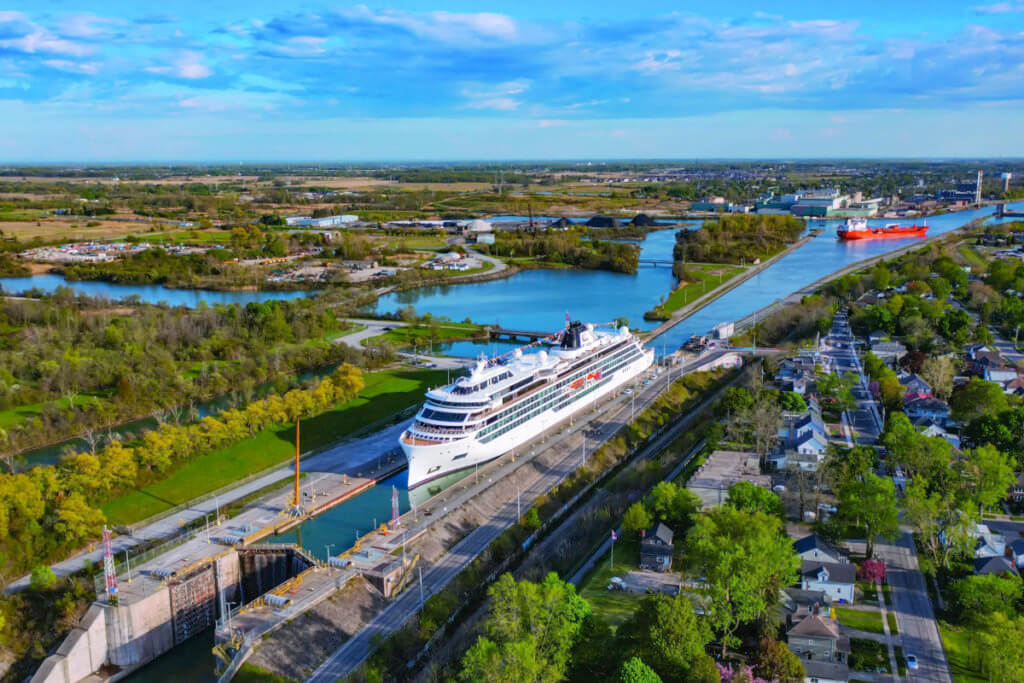
The Welland Canal is one of Canada’s greatest engineering feats of the 19th century. Built from 1824 to 1833 to bypass the Niagara River and its mighty falls, the Welland comprises eight locks that lift or lower ships a total of 326 feet between Lake Ontario and Lake Erie. This vital canal is the spine of the peninsula’s trade and industry, with numerous docks receiving ships and roadways crossing the water. Viking’s latest expedition vessels are purpose-built to traverse this impressive waterway, allowing ships to dock safely while navigating this important crossing.
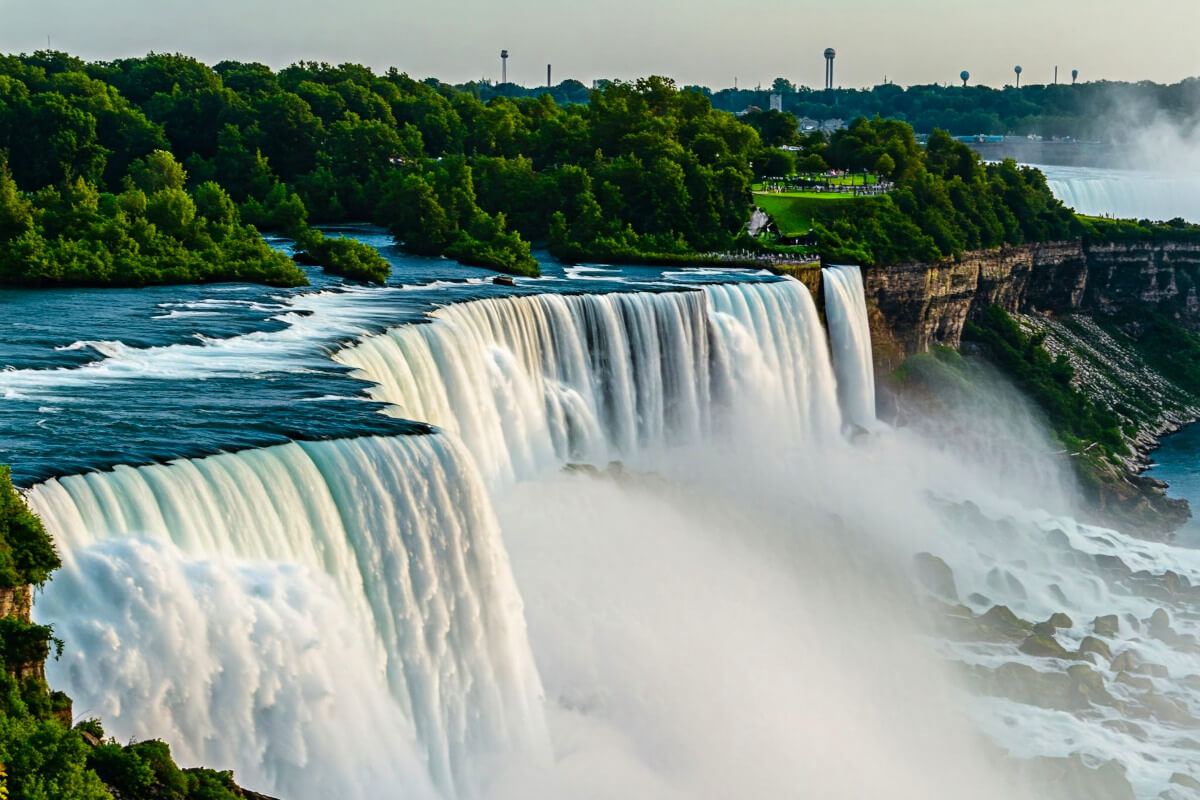
Port Colborne proudly proclaims itself the “Gateway to Navigation.” It is also the gateway to North America’s largest and most powerful cascade, Niagara Falls. Epic in its scope and volume, the falls hurl 42 million gallons of water down 20 stories every minute. Its mile-wide length straddles the Canadian and US borders and is split by islands into three smaller cataracts: Horseshoe Falls, Bridal Veil Falls and American Falls. Long a storied destination for young honeymooners, today the mighty torrent is a thrill for visitors.
Day 3: Point Pelee, Ontario
Point Pelee is a pristine area that points into Lake Erie from Ontario, tapering off to a fine point before disappearing into the waters. The peninsula comprises woodlands and the largest freshwater marshes on the Great Lakes. It was proclaimed a national park in 1918 and is further protected by the Ramsar Convention, an international treaty that protects wetlands. Located at the convergence of two major bird migration flyways, about 350 species have been recorded here. Boardwalks deliver visitors into this unique ecosystem of vast, open vistas and wave-kissed shores.
Day 4: Detroit, Michigan
Detroit sits on one of the four straits that link the Great Lakes to the St. Lawrence Seaway and has emerged as a city rich in culture. In 2015, it became the first US city to earn designation as a “City of Design” by UNESCO for its creativity in urban development. Detroit was founded as a fort in 1701 and later grew into the epicenter of the US automobile industry. Today the city is beloved as the birthplace of Motown, a portmanteau of “motor” and “town.” Its waterfront reveals remarkable examples of postmodern and art deco skyscrapers.
Day 5: Alpena, Michigan
Alpena is in the northeastern region of Michigan’s Lower Peninsula. The town faces Lake Huron’s Thunder Bay and is home to Alpena Light, a brilliant red steel structure built in 1914. After its founding in 1840, fishing and logging were introduced to bolster its economy; today it is home to one of the largest limestone quarries in the world. Two of its architectural gems are listed on the National Register of Historic Places: the art deco County Courthouse and the late-Victorian IOOF Centennial Building, once the city’s courthouse.
Day 6: Mackinac Island, Michigan
Steeped in the charms of simpler times, Mackinac Island is a gem of the Great Lakes. Located in the Straits of Mackinac where Michigan’s upper and lower peninsulas are closest and Lakes Huron and Michigan meet, this bucolic haven preserves gilded Victorian-era treasures along car-free streets traversed by horse-drawn carriages. The perimeter road is the only state highway in the US that does not permit motor vehicles. More than 80% of Mackinac is protected as a state park, from its Greek Revival Grand Hotel and British-built Fort Mackinac to its preserved wilderness areas.
Day 7: Milwaukee, Wisconsin
Milwaukee was first settled by Europeans in 1818, when French-Canadian fur trader Solomon Juneau arrived. German, Polish and Eastern European immigrants followed, bringing with them a long tradition of beer brewing. For several decades in the 20th century, Milwaukee became the world’s most prolific beer producer. Today, the city is a vibrant center of art, history and culture. The RiverWalk, a pedestrian walkway along the Milwaukee, is a popular spot for enjoying relaxing strolls or viewing public art installations.
Day 8: Milwaukee, Wisconsin
Bid farewell to your fellow guests and journey home. Or spend more time exploring, perhaps joining one of our extensions.