At a glance
- Duration:
- 15 Days
- Start/End:
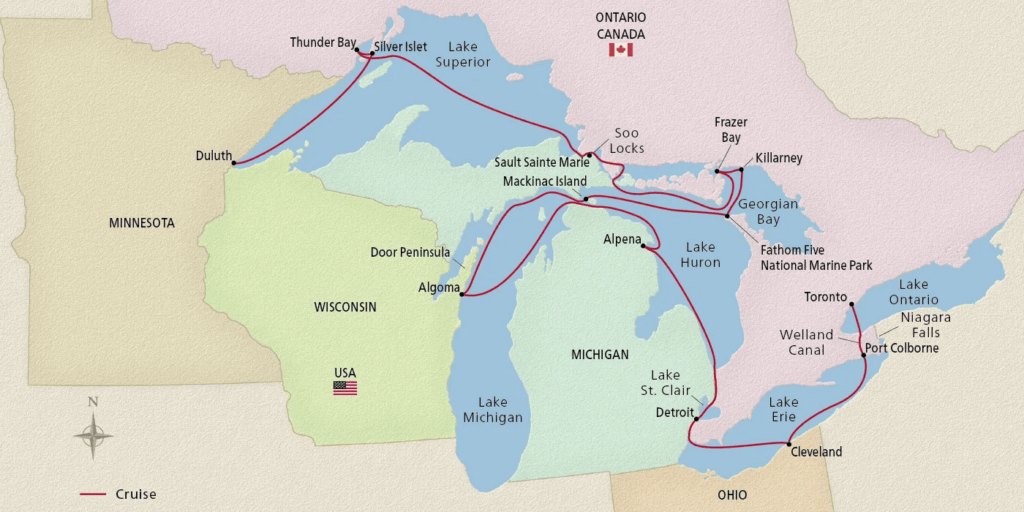
- Toronto, Ontario to Duluth, Minnesota, or reverse
- From:
- $15,995
- Time of Year:
- May - August

Embark on an unforgettable 15-day expedition across North America’s legendary inland seas with Viking’s Great Lakes Collection, a journey that reveals the rich tapestry of culture, history, and natural beauty found along all five of the magnificent Great Lakes.
Your adventure begins in vibrant Toronto, where urban chic meets waterfront charm, an ideal gateway to the lakes. From there, navigate the engineering marvels of the Welland Canal before arriving at the thundering majesty of Niagara Falls, where mist rises high above the Horseshoe Falls and the sheer power of nature captivates every traveler. Continue westward to Cleveland, with its scenic harbor and dynamic arts scene, and then on to Detroit, a city of legendary musical heritage and iconic Americana at The Henry Ford museum. In Alpena, Michigan, immerse yourself in maritime history and consider kayaking above fascinating shipwrecks. The Door Peninsula invites you to explore sandy beaches and rugged shoreline vistas, while Mackinac Island’s car-free streets offer quaint charm and leisurely exploration by bike, foot, or carriage.
As you journey into the heart of the lakes, experience the untouched beauty of Fathom Five National Marine Park and the storied islands and rugged cliffs of Georgian Bay, including a chance to visit Manitoulin Island, the world’s largest freshwater island. Traverse the engineering wonder of the Soo Locks as you transition between lakes, then press on into the deep forests and cultural heritage of Thunder Bay, where boreal landscapes and Anishinaabe traditions await. Your voyage culminates in Duluth, Minnesota, perched on the shore of Lake Superior, where the crisp northern air and sweeping water views signal the end of a remarkable exploration across the freshwater seas.
Throughout this expedition, you’ll combine scenic cruising with immersive shore experiences that illuminate the Great Lakes’ natural wonders and storied port cities.
Great Lakes Collection Highlights
- Niagara Falls (Port Colborne, Ontario) – Stand in awe of one of the world’s most iconic natural wonders, where the immense power and mist of the Horseshoe Falls create an unforgettable experience.
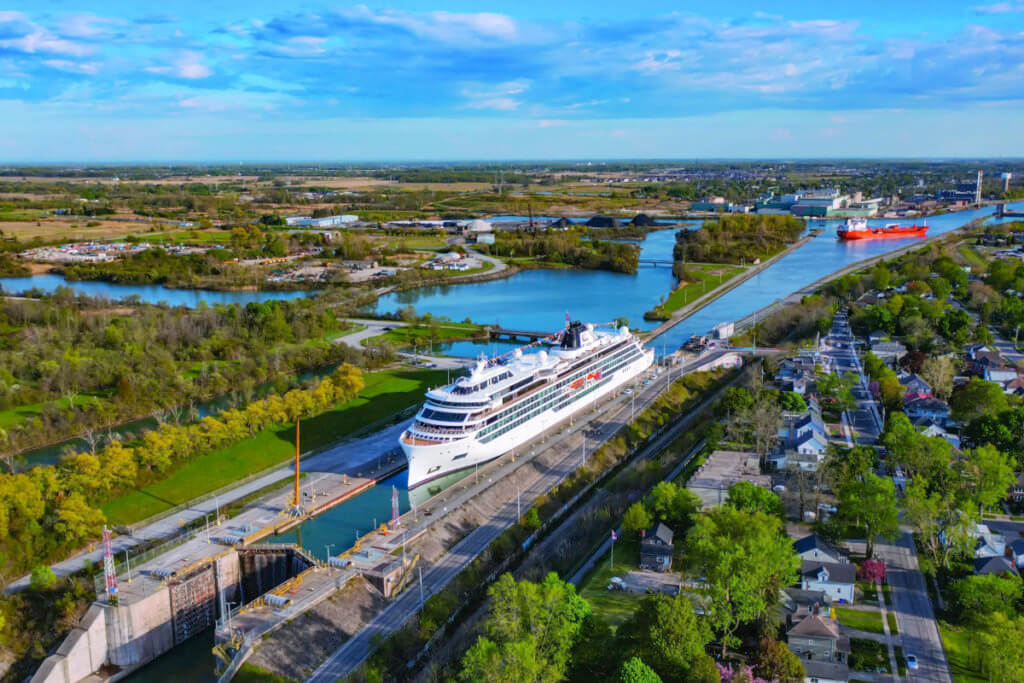
- Transit the Welland Canal – Cruise through this historic engineering marvel connecting Lake Ontario and Lake Erie, experiencing the impressive lock systems up close.
- Mackinac Island, Michigan – Step back in time on this charming, car-free island, exploring by bike, foot, or carriage amid Victorian architecture and scenic shoreline.
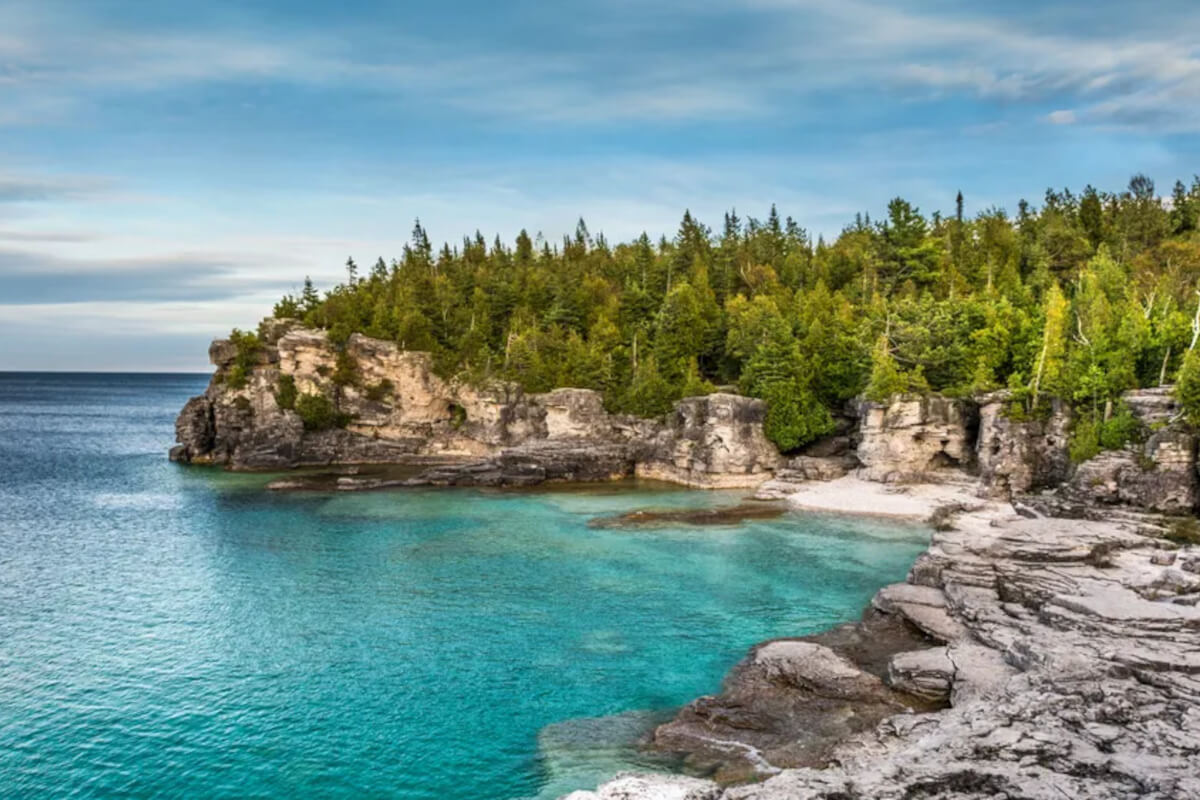
- Georgian Bay & Fathom Five National Marine Park, Ontario – Sail among rugged islands and clear waters, with opportunities to explore natural wonders and wildlife in this stunning marine park.
- Soo Locks Transit – Witness the engineering achievement that connects Lake Huron and Lake Superior, a bucket-list cruising moment as your ship navigates through these historic locks.
- Thunder Bay & Lake Superior Wilderness – Explore the pristine boreal forests, learn about Indigenous heritage, and take in the breathtaking scenery of Canada’s north shore before concluding in Duluth, Minnesota.
Great Lakes Collection Details
Day-to-Day Itinerary
Day 1: Toronto, Ontario, Canada
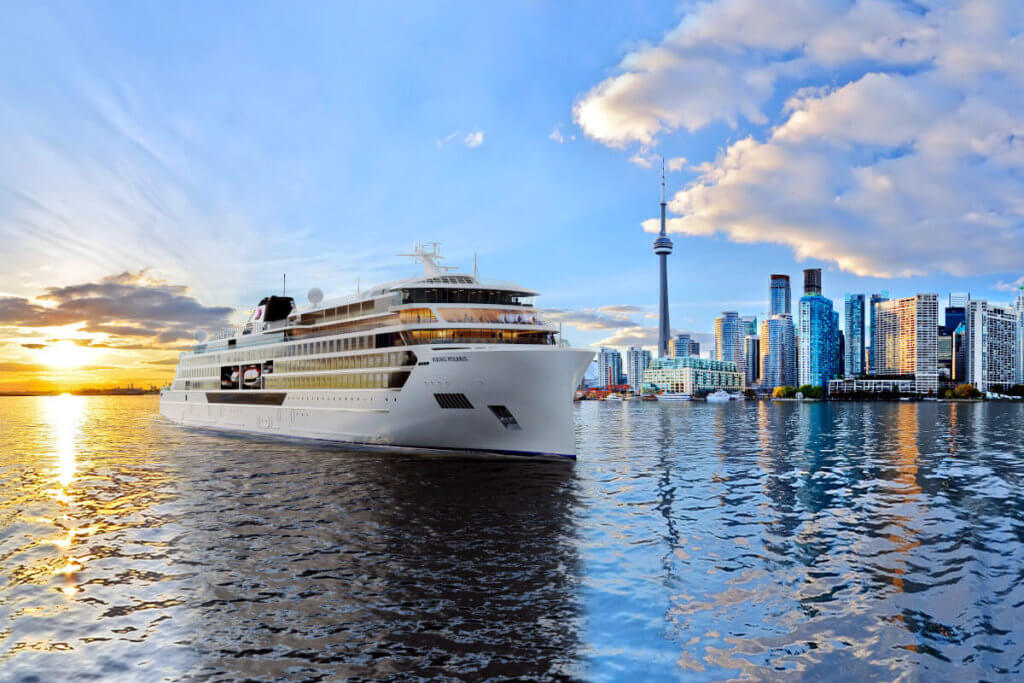
Embark your ship and settle into your stateroom. Toronto is beloved by many as one of Canada’s boldest and most innovative capitals. Hugging the shores of Lake Ontario and facing the picturesque Toronto Islands, it was founded by British loyalists fleeing the American Revolution in 1793. Today the city is a pleasure to explore on foot, whether strolling past the Victorian bay-and-gable homes of Rosedale, or the historic enclave of Wychwood Park, an Ontario Heritage Conservation district. The city’s Distillery District is home to North America’s largest preserved collection of Victorian industrial architecture.
Day 2: Welland Canal
The Welland Canal is one of Canada’s greatest engineering feats of the 19th century. Built from 1824 to 1833 to bypass the Niagara River and its mighty falls, the Welland comprises eight locks that lift or lower ships a total of 326 feet between Lake Ontario and Lake Erie. This vital canal is the spine of the peninsula’s trade and industry, with numerous docks receiving ships and roadways crossing the water. Viking’s latest expedition vessels are purpose-built to traverse this impressive waterway, allowing ships to dock safely while navigating this important crossing.
Day 3: Niagara Falls (Port Colborne), Ontario, Canada
Port Colborne proudly proclaims itself the “Gateway to Navigation.” It is also the gateway to North America’s largest and most powerful cascade, Niagara Falls. Epic in its scope and volume, the falls hurl 42 million gallons of water down 20 stories every minute. Its mile-wide length straddles the Canadian and US borders and is split by islands into three smaller cataracts: Horseshoe Falls, Bridal Veil Falls and American Falls. Long a storied destination for young honeymooners, today the mighty torrent is a thrill for visitors.
Day 4: Cleveland, Ohio, United States
Cleveland sits on the shores of Lake Erie at the mouth of the Cuyahoga River and is a major port along the St. Lawrence Seaway. This industrial city is also a gateway to the Cuyahoga Valley and its namesake national park, a region of reclaimed nature covering 51 square miles of landscape between Cleveland and Akron. A mix of forests, wetlands and canals, as well as the majestic cascade of Brandywine Falls, the park has more than 125 miles of hiking trails that crisscross the land, including one that runs along the former route of the Ohio and Erie Canal Towpath Trail.
Day 5: Detroit, Michigan, United States
Detroit sits on one of the four straits that link the Great Lakes to the St. Lawrence Seaway and has emerged as a city rich in culture. In 2015, it became the first US city to earn designation as a “City of Design” by UNESCO for its creativity in urban development. Detroit was founded as a fort in 1701 and later grew into the epicenter of the US automobile industry. Today the city is beloved as the birthplace of Motown, a portmanteau of “motor” and “town.” Its waterfront reveals remarkable examples of postmodern and art deco skyscrapers.
Day 6: Alpena, Michigan, United States
Alpena is in the northeastern region of Michigan’s Lower Peninsula. The town faces Lake Huron’s Thunder Bay and is home to Alpena Light, a brilliant red steel structure built in 1914. After its founding in 1840, fishing and logging were introduced to bolster its economy; today it is home to one of the largest limestone quarries in the world. Two of its architectural gems are listed on the National Register of Historic Places: the art deco County Courthouse and the late-Victorian IOOF Centennial Building, once the city’s courthouse.
Day 7: Door Peninsula (Algoma), Wisconsin, United States
Algoma is the gateway to the scenic Door Peninsula, a slender limestone peninsula projecting out into Lake Michigan. It was first explored by French missionaries and fur traders during the 17th century. According to legend, Jean Nicolet believed his encounter with the Menominee Tribe was a meeting with Asians of the Far East. The peninsula is also the westernmost edge of the Niagara Escarpment, a prehistoric ridge that stretches more than 650 miles across the Great Lakes region, and is home to boreal forests, rugged rock formations and sandy beaches.
Day 8: Mackinac Island, Michigan, United States
Steeped in the charms of simpler times, Mackinac Island is a gem of the Great Lakes. Located in the Straits of Mackinac where Michigan’s upper and lower peninsulas are closest and Lakes Huron and Michigan meet, this bucolic haven preserves gilded Victorian-era treasures along car-free streets traversed by horse-drawn carriages. The perimeter road is the only state highway in the US that does not permit motor vehicles. More than 80% of Mackinac is protected as a state park, from its Greek Revival Grand Hotel and British-built Fort Mackinac to its preserved wilderness areas.
Day 9: Fathom Five National Marine Park, Ontario, Canada
Fathom Five National Marine Park is nestled between the waters of Georgian Bay and Lake Huron. Its rugged landscapes offer a picturesque backdrop to the blue-tinged waters that are a popular destination for scuba divers to explore an array of sunken shipwrecks. Nearby Flowerpot Island is famed for its rock formations and historic lighthouse, with hiking trails that showcase a wealth of treasures. The Saugeen Ojibway People are collaborating with Parks Canada on an environmental project to protect the freshwater ecosystem, for today and beyond.
Day 10: Georgian Bay (Killarney), Ontario, Canada
Killarney was founded by a French-Canadian fur trader in 1820; he named the post Shebahonaning, or “canoe passage.” Its location on the northern shore of Georgian Bay made it ideal for trading. Nearby, the stunning cliffs of the La Cloche range rise dramatically above the shores of Lake Huron. These remarkable mountains are the pinnacle of Killarney Provincial Park, a vast wilderness of lakes and Eastern mixed forest. This breathtaking expanse of protected land is laced with hiking trails and—true to Killarney’s original name—canoe routes that link the area’s lake system.
Day 11: Georgian Bay (Frazer Bay), Ontario, Canada
Frazer Bay is located off a remote finger of land on the eastern tip of the North Channel in Ontario’s Georgian Bay, a UNESCO Biosphere Reserve. Its eponymous hill reaches almost 600 feet, offering sweeping views of the surrounding landscape. The bay lies near Killarney Provincial Park, a vast wilderness of lakes and Eastern mixed forest framed by glacier-sculpted pink granite cliffs. Across the channel lies scenic Manitoulin Island, the world’s largest freshwater lake island and itself home to another 108 freshwater lakes—some with islands of their own.
Day 12: Sault Sainte Marie, Michigan, United States
Founded by French missionaries in 1668, Sault Sainte Marie is Michigan’s oldest city and one of the oldest in the US. It is also home to the famous Soo Locks, a series of parallel locks that make river travel between Lake Superior and Lake Huron possible, thereby linking Superior to the lower Great Lakes and the Atlantic Ocean. Opened in 1855 to allow ships to bypass the St. Marys River’s 21-foot fall over roiling rapids, this innovative lock system was one of the great engineering projects of its day. Today, it guides ships past Sault Sainte Marie and its twin city in Ontario.
Day 13: Thunder Bay, Ontario, Canada
Thunder Bay is known as “Canada’s Gateway to the West” for its location at the final navigational point on the Canadian side of Lake Superior. Originally founded as a fur trading post, a settlement was established in 1803 and Fort William was erected. In 1970, Fort William and neighboring Port Arthur were merged to form the City of Thunder Bay. Today, it is one of Ontario’s most vibrant cities and a center of art and culture. Its Waterfront District is beloved for its views across the bay of the Sleeping Giant, a long line of mesas that resemble a giant lying on its back.
Day 14: Silver Islet, Ontario, Canada
Silver Islet sits on the southern edge of the Sibley Peninsula at the mouth of Thunder Bay. Nearby Sleeping Giant Provincial Park attracts outdoor enthusiasts year-round with its diverse wildlife and many miles of hiking trails that lead to spectacular views of the Canadian Shield landscape. Less than a mile from its shores are the remnants of an abandoned silver mine. Located 1,200 feet below Lake Superior, this unique underwater mine was the world’s largest and most valuable silver mine, producing the modern-day equivalent of $78 million before flooding in 1884.
Day 15: Duluth, Minnesota, United States
Disembark the ship and transfer to your transportation home.