
An Insider’s Guide to Amazon River Cruises and the Pacaya-Samiria Reserve
For travellers who have already ticked off the great safari lodges of Africa and the ice-flanked fjords of Alaska, the Peruvian Amazon offers something rarer: a wilderness so vast and so alive that a week inside it barely scratches the surface. At the heart of that wilderness sits the Pacaya-Samiria National Reserve, more than five million acres of seasonally flooded rainforest where pink dolphins surface beside your skiff and the night sky ignites with more stars than most people have ever seen at once.
This is not a destination you reach by resort transfer. It is reached by small expedition ship, and that distinction matters. Here is what discerning travellers need to know to plan the journey, and what awaits once you arrive.
Why the Pacaya-Samiria Reserve Belongs on Your List
The Pacaya-Samiria Reserve is bordered by the Marañón and Ucayali rivers, two powerful waterways that converge to form the Amazon itself. Each year, Andean snowmelt floods the reserve’s banks, carves new tributaries, and then withdraws to reveal forest clearings and beaches. Locals call it the Mirrored Forest, a nod to the way its glassy black-water lakes reflect the sky so precisely that horizon lines seem to disappear.
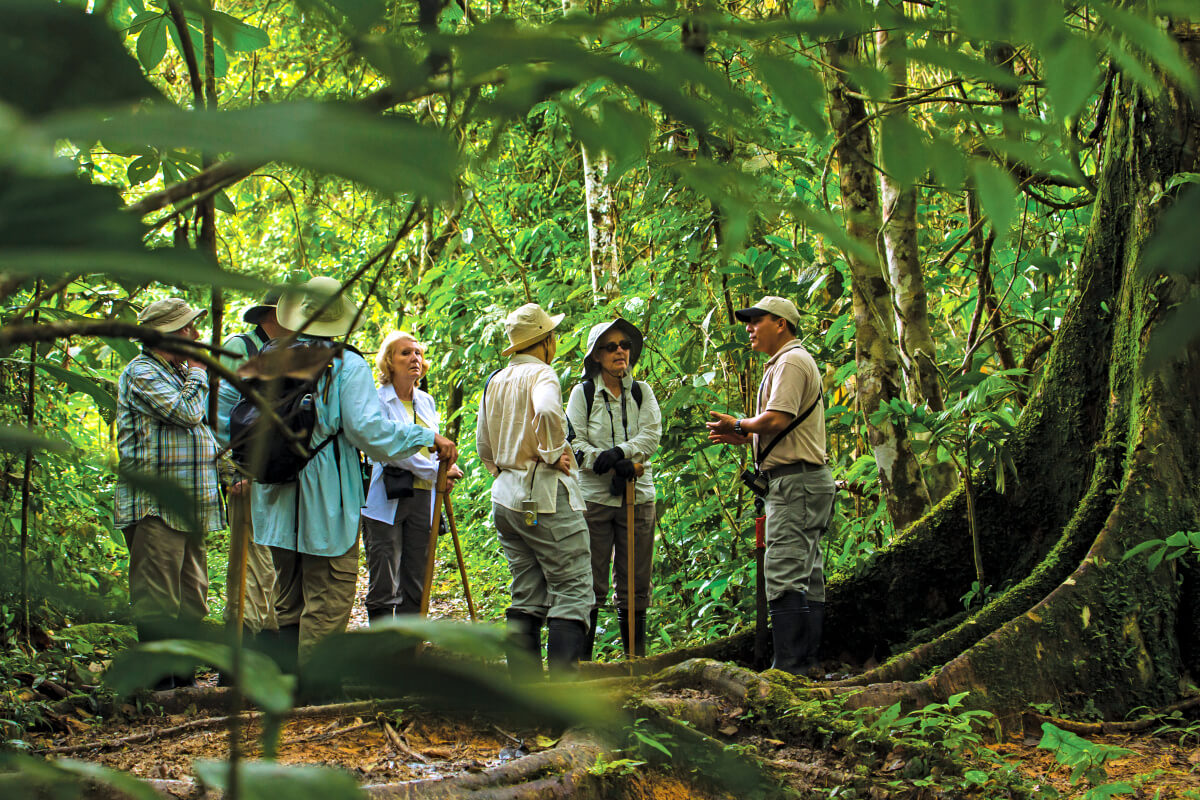
 It is one of the most biodiverse patches of rainforest left on the planet. Expect encounters with pink and grey river dolphins, monk saki monkeys, saddleback tamarins, howler monkeys, scarlet macaws, giant paiche fish, caimans, and an extraordinary range of birdlife, from motmots and toucans to striated herons and vocal oropendolas. Because the reserve is accessible only by water, and only in small numbers, wildlife here behaves with a wildness that larger, road-accessible parks simply cannot offer.
Just as compelling is the human story. The ribereños, traditional river people, have lived along these waterways for generations. Many cruise itineraries include visits with local artisans and community leaders, including women-led cooperatives supported by organizations such as Minga Peru, giving travellers a rare, respectful window into daily life along the river rather than a staged cultural performance.
Planning Your Amazon Expedition
When to Go
The Amazon does not have an off-season in the traditional sense, and cruises run year-round, but the character of the reserve shifts with the water.
- High-water season (roughly December through May) floods deeper into the forest, allowing skiffs and kayaks to glide beneath the canopy and putting travellers eye-level with treetop wildlife.
- Low-water season (roughly June through November) exposes riverbanks and sandbars, making hiking excursions and beach landings more accessible, and often concentrating wildlife around shrinking waterways.
Iquitos, the gateway city, holds a steady tropical climate year-round, with average highs near 88 to 90°F and consistent humidity. Rainfall is heaviest from December through April and lightest from June through September, though showers can appear in any month. There is genuinely no wrong time to visit; the choice comes down to whether you prefer flooded-forest paddling or dry-land exploration.
Getting There
 Journeys begin in Lima, Peru’s capital, typically with an overnight stay before a flight to Iquitos, the largest city in the world unreachable by road. From Iquitos, travellers continue overland to the riverside village of Nauta to embark their ship. Because most international flights arrive in Lima late in the evening, many travellers add a pre-voyage night at a Lima hotel, and some extend their stay further to explore the UNESCO World Heritage-listed historic centre.
Choosing the Right Ship
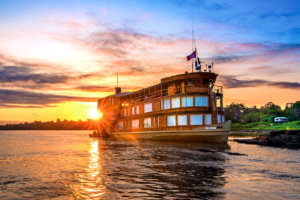 Amazon expedition cruising is defined by intimacy rather than scale. Vessels such as the 28-passenger Delfin II and Delfin III are purpose-built riverboats designed to navigate narrow tributaries that larger craft cannot reach. Days are structured around excursions launched directly from the ship: skiffs, kayaks, and, water levels permitting, guided hikes, all led by naturalists with deep knowledge of the river environment. This is expedition travel in the fullest sense, closer in spirit to a Galápagos voyage than a conventional river cruise.
What to Pack and Prepare For
Lightweight, quick-dry clothing in neutral tones, a wide-brimmed hat, high-SPF sunscreen, and strong insect repellent are essentials. Binoculars are indispensable for wildlife spotting, and a dry bag or rain cover for cameras is wise given the region’s humidity and occasional downpours. Most operators recommend a basic pre-travel medical consultation, as some destinations in the Peruvian Amazon carry recommendations for specific vaccinations or antimalarial precautions depending on your itinerary.
Top Attractions and Experiences Within the Reserve
- Skiff and kayak wildlife safaris. Twice-daily outings, often at dawn and dusk when animals are most active, are the backbone of any Amazon expedition. Expert skiff drivers help travellers spot camouflaged wildlife that would otherwise go unnoticed, from a motionless sloth to a family of squirrel monkeys moving through the canopy.
- Night skiff excursions. As darkness falls, spotlight-guided skiff rides reveal a different Amazon entirely: caimans with glowing eyes at the waterline, tree frogs, and fishing bats skimming the surface. It is one of the most memorable evenings of any expedition itinerary.
- Swimming with pink river dolphins. In select lakes within the reserve’s interior, travellers can swim in the company of the endangered pink river dolphin, an experience few destinations on earth can offer.
- Victoria amazonica lily lagoons. These giant water lilies, with pads that can grow to several feet across, float across quiet black-water lagoons and rank among the most photographed sights in the entire Amazon basin.
- Birdwatching hikes. Guided walks target signature species such as the oropendola, scarlet macaw, and a striking range of tanagers, kingfishers, and herons, making the reserve a genuine bucket-list stop for birders.
- Community visits with the ribereños. Meeting local river families and artisan cooperatives offers insight into a way of life shaped entirely by the rhythm of the flood cycle, along with the chance to support sustainable local craft traditions directly.
- The Amazon Rescue Center. Many itineraries include a stop near Iquitos at this wildlife rehabilitation centre, home to manatees and other rescued Amazonian species, before travellers begin their return journey home.
Itineraries That Visit the Pacaya-Samiria Reserve
Several small-ship expedition itineraries operated with Lindblad Expeditions include extended time inside the Pacaya-Samiria Reserve. All depart from and return to Lima, and all sail aboard the intimate Delfin II or Delfin III.
- Upper Amazon: A River Expedition (10-Day). Sailing aboard the Delfin II, this itinerary devotes a full six days, Days 3 through 8, to exploring the Pacaya-Samiria Reserve, with daily skiff, kayak, and hiking excursions, opportunities to swim with pink dolphins, and visits with local ribereño communities.
- Upper Amazon: A River Expedition (9-Day). A slightly condensed version of the above, also aboard the Delfin II, with six full days dedicated to the reserve and the same signature excursions, community visits, and naturalist-led wildlife outings.
- Upper Amazon: A River Expedition (6-Day). For travellers with less time to spare, this shorter itinerary aboard the intimate Delfin III still delivers a deep, immersive stretch inside the reserve.
- Exploring Peru: Machu Picchu and the Amazon. For those who want to pair two of South America’s greatest icons in a single trip, this 10-day journey combines Cusco and Machu Picchu with a Pacaya-Samiria Reserve cruise aboard the Delfin III, offering both Andean history and Amazon wilderness in one seamless expedition.
Across all four itineraries, expedition leaders and local naturalists, many born along the river and educated in Iquitos, guide every outing, and excursions, park fees, and the guidance of the expedition staff are included in the voyage fare. Given the reserve’s remote setting and the limited number of vessels licensed to explore it, cabins on peak-season departures book well in advance, so early planning is worthwhile for travellers eyeing a specific date.
A Final Word
The Pacaya-Samiria Reserve rewards travellers who want more than a photograph of the Amazon; it rewards those willing to move slowly through it, by skiff and by kayak, at dawn and after dark, in the company of people who have spent their lives reading its waters. For adventure travellers who have grown accustomed to seeking out the world’s last truly wild places, this may be one of the last great ones left.
Contact Sunstone Tours & Cruises toll-free at 1-888-815-5428 to reserve your Amazon River cruise expedition to the Pacaya-Samiria Reserve.