
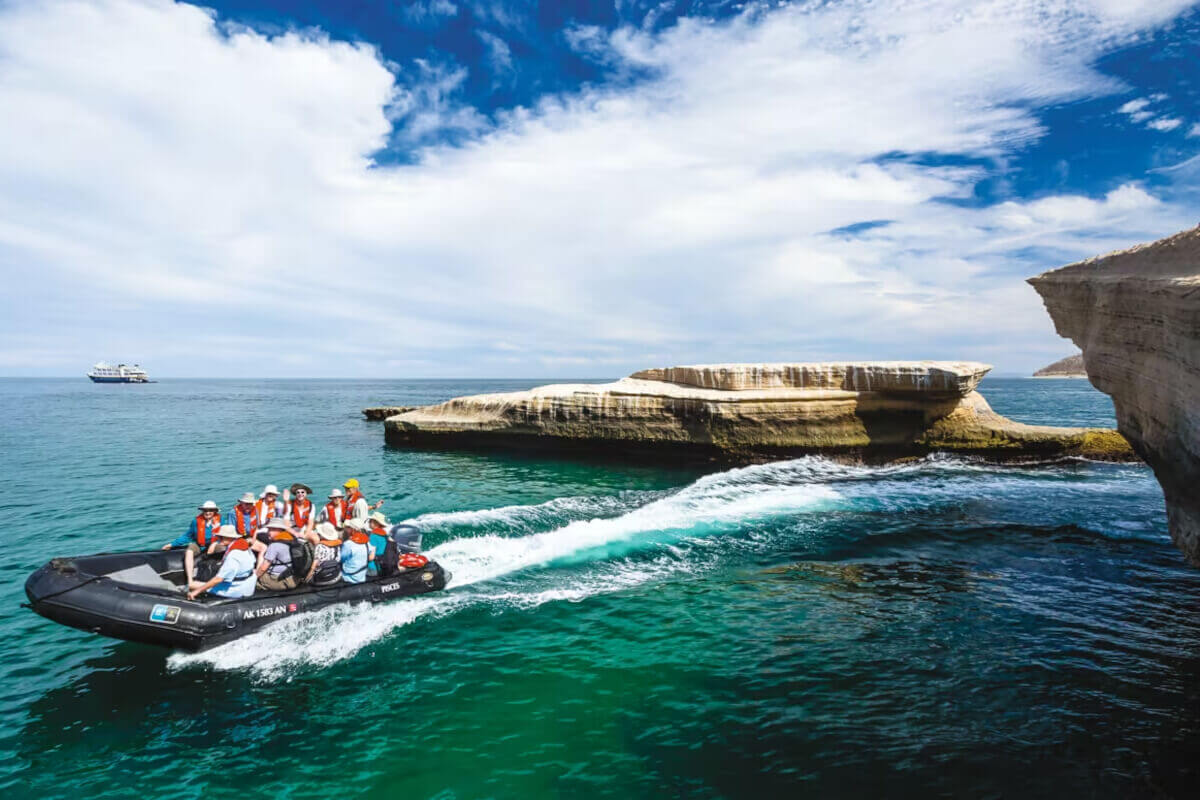
There’s a reason Jacques Cousteau called the Sea of Cortez the “aquarium of the world,” and a reason John Steinbeck spent months logging its coastline in The Log from the Sea of Cortez. Wedged between the Baja California peninsula and mainland Mexico, this narrow sea holds an outsized share of the planet’s marine life — more than a third of the world’s marine mammal species pass through or call it home. For travelers who’ve already done the big-ship Caribbean and are looking for something rarer, wilder, and far more personal, Baja is quietly becoming one of the most sought-after small ship destinations reachable from the United States.
This is not a destination of buffet lines and beach clubs. It’s a destination of gray whale mothers nudging their curious calves toward your inflatable panga, sea lion pups torpedoing past your snorkel mask, and nights so dark and star-flooded you can trace the Milky Way from your ship’s top deck — all just a few hours’ flight from home.
Who This Destination Is For
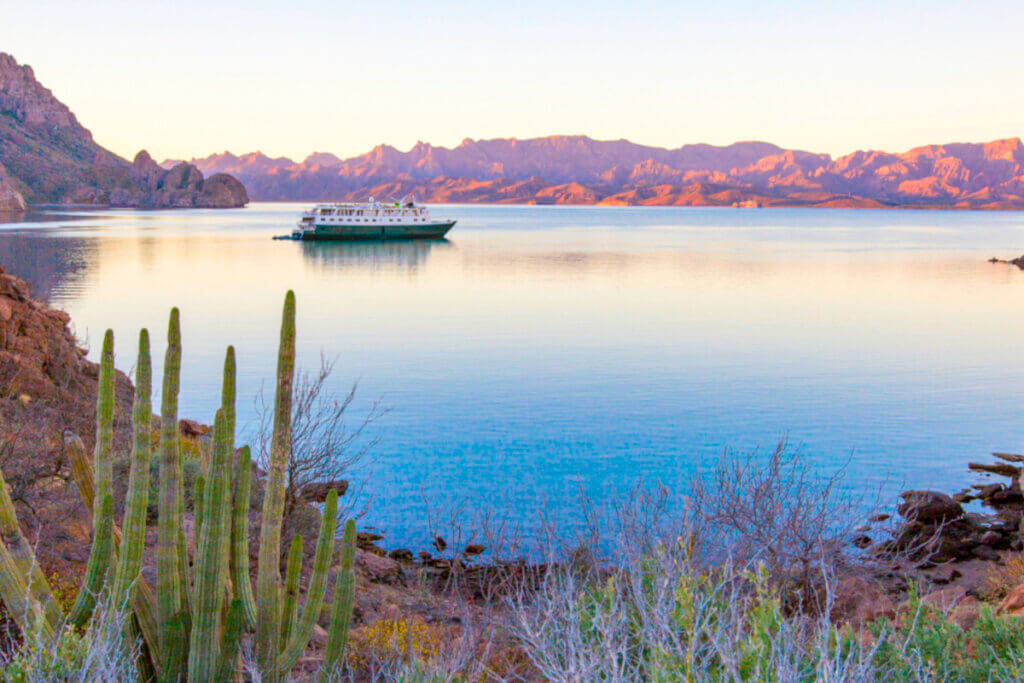
Baja Mexico and the Sea of Cortez reward a particular kind of traveler. This is the trip for you if:
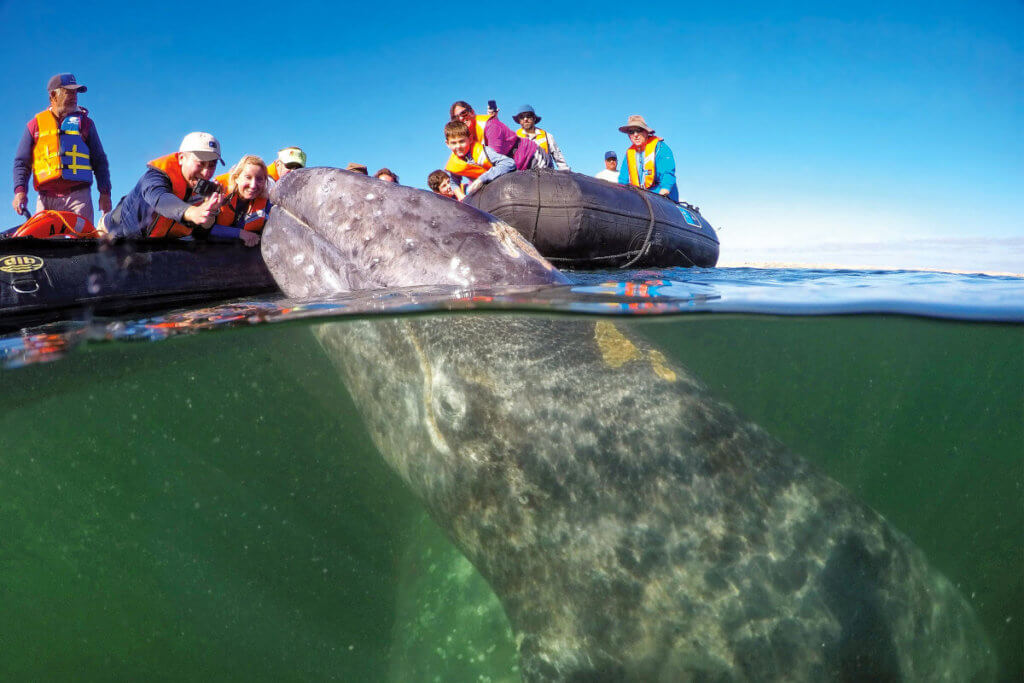
- You want genuine wildlife encounters, not staged ones. Watching a 40-ton gray whale surface beside a 16-foot skiff isn’t a photo op arranged for tourists — it’s wild animal behavior that happens to occur in one of the few places on Earth where whales approach boats voluntarily.
- You value intimacy over scale. These ships carry somewhere between 22 and 100 guests, not 3,000. You’ll know your captain’s name, your naturalist’s specialty, and most of your fellow passengers by day three.
- You’re active, but not extreme. Kayaking, snorkeling, hiking desert dunes, and Zodiac cruising are the currency here — approachable, but far more physical than a lounge chair.
- You appreciate expertise. Onboard naturalists, marine biologists, and photography instructors are as central to the experience as the ship itself.
- You want a short-haul exotic trip. Unlike the Galápagos or Antarctica, Baja is typically reached via a direct flight to Los Cabos, La Paz, or Loreto — meaning less travel fatigue and more time in the water.
- You’re comfortable with unstructured luxury. Cabins are comfortable rather than opulent; the real luxury is expert access, small-group flexibility, and days built around the natural world rather than a fixed schedule.
If your idea of a great vacation involves a spa deck and formal dining nights, this isn’t it. If it involves being genuinely humbled by nature before breakfast, keep reading.
Why the Sea of Cortez Is Different
The Gulf of California — its formal name — is a young, deep, nutrient-rich sea created by the same tectonic forces still pulling Baja away from mainland Mexico. Cold, nutrient-dense currents upwell from the depths and feed a food chain that runs from plankton to blue whales in just a few links. UNESCO recognized the gulf’s many islands and protected areas as a World Heritage Site for exactly this reason: an extraordinary concentration of endemic and migratory species packed into a relatively compact, navigable body of water — ideal territory for a small ship that can nose into coves and lagoons a large vessel could never reach.
Highlights, Sights & Signature Experiences
Magdalena Bay & San Ignacio Lagoon — The Pacific-side calving lagoons where gray whales migrate each winter from Arctic waters to give birth. Guests transfer into small pangas (local skiffs) for eye-level encounters with whales and their calves, often within arm’s reach.
Los Islotes — A pair of rocky islets at the mouth of the Sea of Cortez and one of the best spots anywhere to snorkel with a resident colony of California sea lions, including famously playful, curious pups.
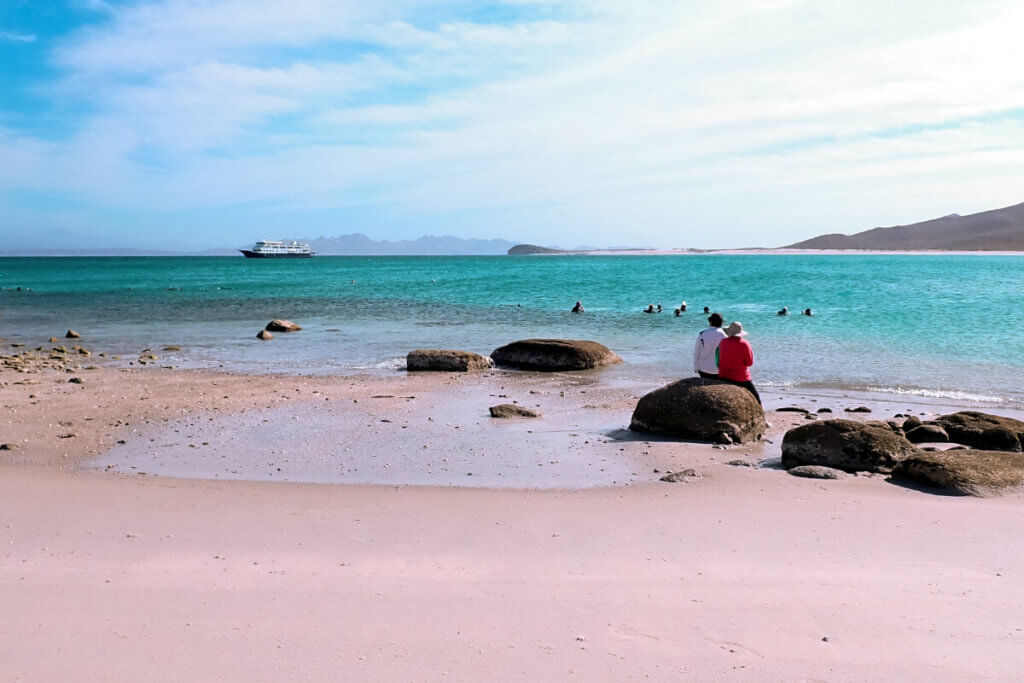
Isla Espíritu Santo & Isla San José — UNESCO-listed desert islands with turquoise coves, dramatic red-rock cliffs, and hiking trails through cardón cacti forests and dry arroyos.
Cabo Pulmo National Park — One of the oldest and most successful marine reserves in the world, protecting a rare living coral reef and dense schools of tropical fish, rays, and reef sharks.
Loreto & La Paz — Historic mission towns that anchor many itineraries, offering a cultural counterpoint to the wilderness days: colonial architecture, waterfront malecóns, artisan markets, and some of the best fish tacos on the peninsula.
San Evaristo & Puerto Los Gatos — Remote fishing villages and sculpted sandstone coves that showcase the “other Baja” — small-scale, unhurried, and largely untouched by mass tourism.
Star-filled night skies — With little light pollution across most of the gulf, clear desert air makes for some of the best stargazing available from a ship deck in North America.
Wildlife: The Main Event
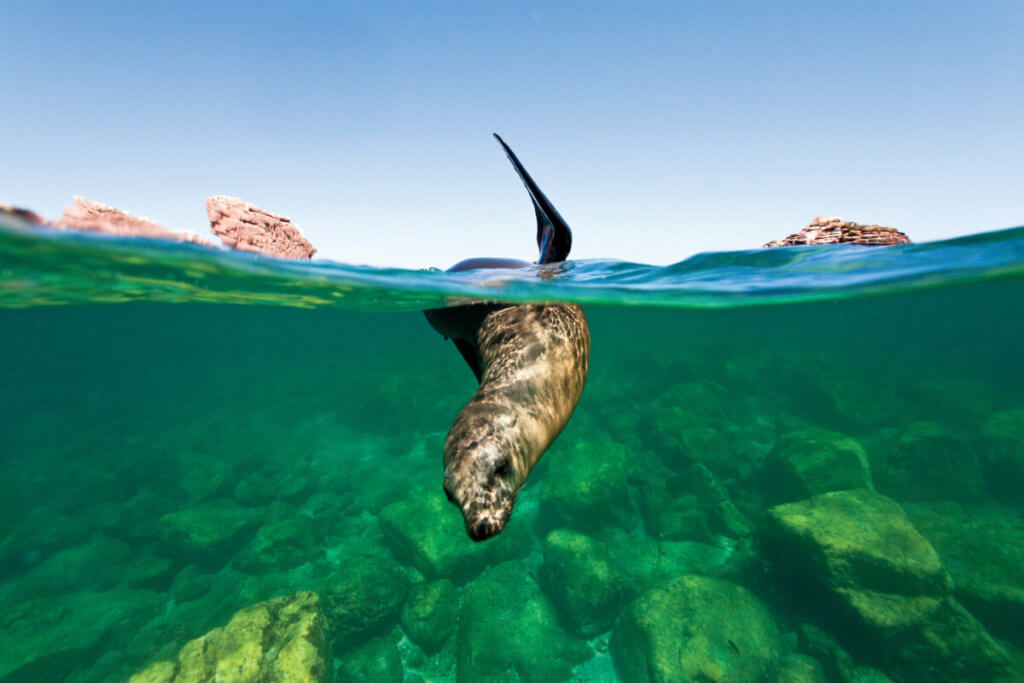
This is the reason most people book. Signature encounters include:
- Gray whales — The star of winter sailings, especially in Magdalena Bay and San Ignacio Lagoon, where mothers and calves famously approach small boats.
- Blue whales, fin whales, humpbacks, and orcas — The gulf hosts as many as five whale species in a season, drawn by the seasonal upwelling of nutrients.
- California sea lions — Playful, curious, and a near-guaranteed snorkeling highlight at Los Islotes.
- Common and bottlenose dolphins — Large pods regularly bow-ride alongside Zodiacs and ship hulls.
- Whale sharks — Seasonally present in bays near La Paz, offering snorkelers a chance to swim alongside the world’s largest fish.
- Marine and terrestrial birdlife — Blue-footed boobies, frigatebirds, ospreys, herons, and (seasonally) migrating shorebirds fill the skies and shorelines.
- Desert flora and reptiles — Towering cardón cacti, elephant trees, and endemic lizards populate the arid islands between marine outings.
Activities Onboard and Ashore
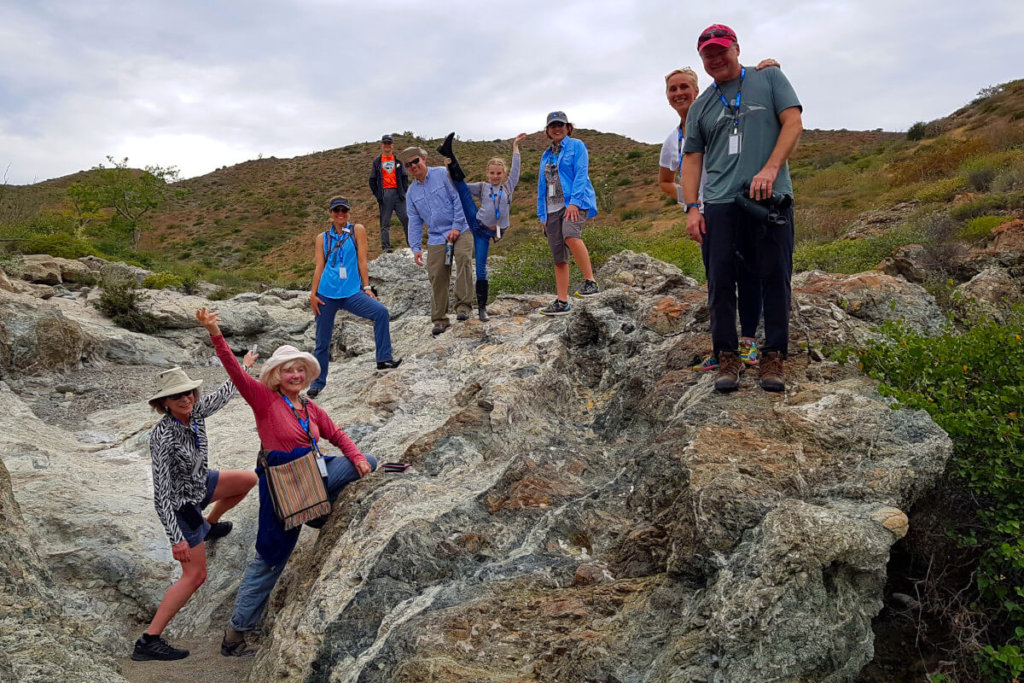
- Panga and Zodiac excursions for whale watching and wildlife photography
- Snorkeling with sea lions, tropical fish, and (seasonally) whale sharks
- Sea kayaking through mangrove channels and along sculpted coastlines
- Stand-up paddleboarding in calm coves
- Hiking across desert dunes, volcanic terrain, and island trails
- Mule and ranchero-guided rides through canyon backcountry on select itineraries
- Snorkeling/diving at Cabo Pulmo’s living reef
- Onboard naturalist lectures, photography workshops, and citizen-science programs (some lines even let younger guests collect plankton samples as part of an “explorer-in-training” style program)
- Farm-to-table and regional culinary experiences, often featuring ingredients sourced from local fishing and farming communities
- Cultural stops in Loreto, La Paz, and small fishing villages, including artisan visits and local history
Best Time to Go
Baja’s small ship season runs primarily January through April, with itinerary timing built around wildlife migration:
| Month | Highlight |
|---|---|
| January – March | Peak gray whale season in Magdalena Bay and San Ignacio Lagoon; calmest seas; classic “whale voyage” departures |
| March – April | Widest range of wildlife — whales still present, sea lion pupping season begins, pleasant hiking temperatures |
| Fall (October – November) | Some operators run shoulder-season sailings focused on migratory birds and warmer-water snorkeling, including whale shark season near La Paz |
Winter and early spring are the sweet spot for most travelers: warm days, cool nights, minimal rain, and the gray whale migration in full swing. Summer is generally avoided by small ship operators due to heat and hurricane season.
Choosing Your Itinerary
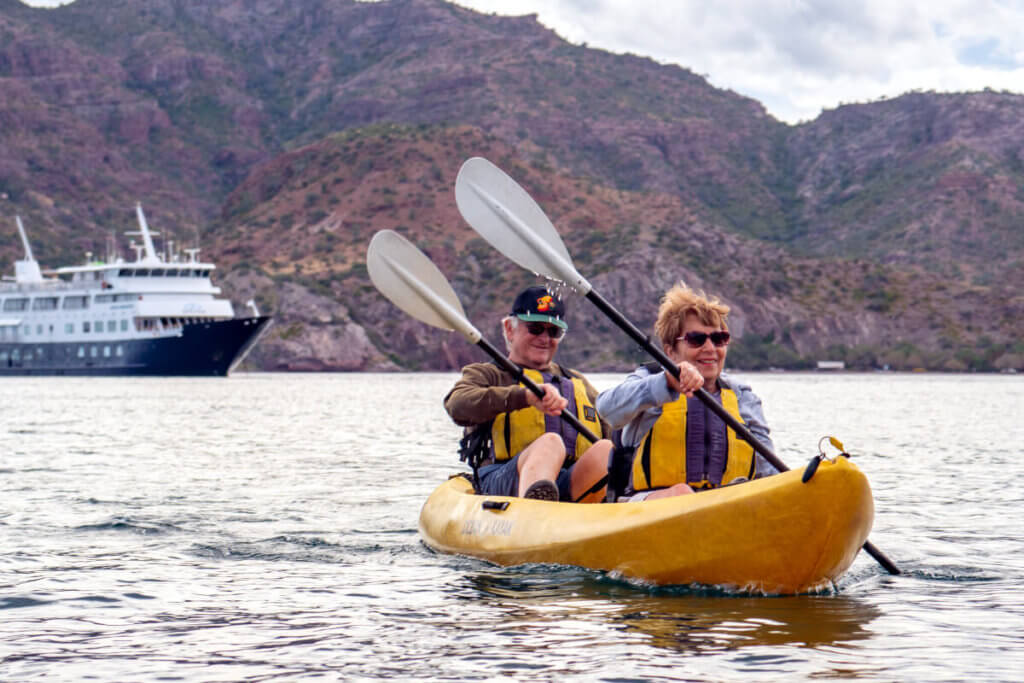
Small ship operators in Baja tend to cluster into a few itinerary “flavors,” each suited to a different kind of traveler.
For the classic wildlife-first experience (7–8 days) Roundtrip sailings from La Paz or San José del Cabo built around gray whale watching in Magdalena Bay, sea lion snorkeling at Los Islotes, and island hiking. This is the best entry point for first-time Baja travelers and delivers the highest concentration of marine wildlife encounters per day.
For the deep-dive expedition (10–13 days) Longer sailings — some tracing a “Steinbeck’s Wake” style route through the Sea of Cortez, others linking Baja to the Channel Islands and Southern California coast — that add more remote anchorages, extended whale time, and richer cultural stops in Loreto and smaller fishing villages. Best for travelers who’ve already done a shorter Baja trip or want maximum time in the wilderness.
For photographers Dedicated photography-focused departures pair the standard wildlife itinerary with an embedded photo instructor, extra shooting time in optimal light, and smaller group sizes at key wildlife sites.
For families Family-oriented departures (often discounted for young children) build in more hands-on, kid-friendly activities — mule rides, tide-pooling, snorkeling with sea lion pups — while keeping the same wildlife-rich route.
For a literary, slow-travel angle Voyages inspired by Steinbeck’s Log from the Sea of Cortez emphasize the historic and cultural fabric of the gulf alongside wildlife viewing, with more time in fishing villages like San Evaristo and a narrative thread connecting stops to the 1940 Steinbeck-Ricketts expedition.
What to Expect Onboard
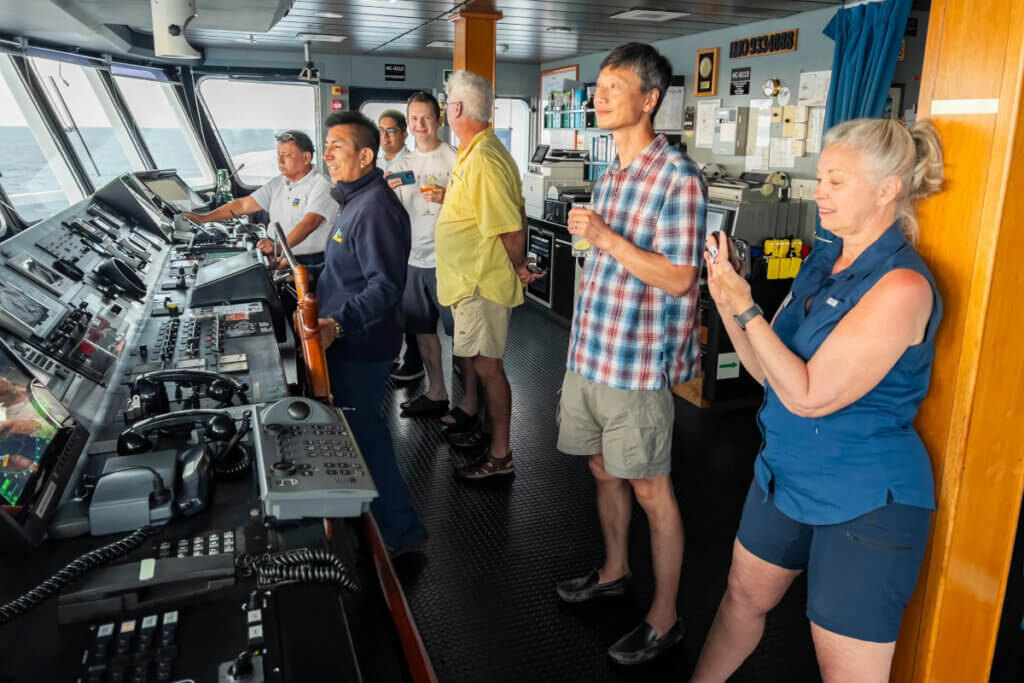
Ships in this category typically carry between 22 and 100 guests — small enough that itineraries stay flexible day-to-day, adjusting in real time to where whales are surfacing or conditions are best for a landing. Expect:
- Open bridges and expedition leaders who explain the “why” behind each stop
- Casual, communal dining with a strong regional and sustainable-sourcing focus
- Zodiac or panga fleets used daily for excursions
- Onboard naturalists, marine biologists, and sometimes historians or photographers
- A dress code that tops out at “resort casual” — there’s no formal night here
- Wellness touches on some ships (yoga decks, hot tubs, sauna) rather than full spas
Practical Notes for Planning
- Gateway airports: Los Cabos (SJD), La Paz (LAP), and Loreto (LTO) are the primary embarkation points; most U.S. cities connect via a single stop or direct flight.
- Group size: Expect ships ranging from about 22 to 100 passengers — genuinely small by cruise industry standards.
- Pricing: Per-person fares for 8-night Baja voyages generally start in the $7,000–$9,000 range, with longer 10- to 13-night expeditions running higher; pricing typically includes shore excursions, naturalist-guided outings, and most meals.
- Booking window: Peak January–March gray whale departures sell out well in advance — a year or more ahead is not unusual for prime cabin categories.
- Physical demands: Wet landings, ladder climbs into Zodiacs, and moderate hikes are standard; most itineraries are accessible to active travelers of a wide age range but are not wheelchair-friendly at most landing sites.
The Bottom Line
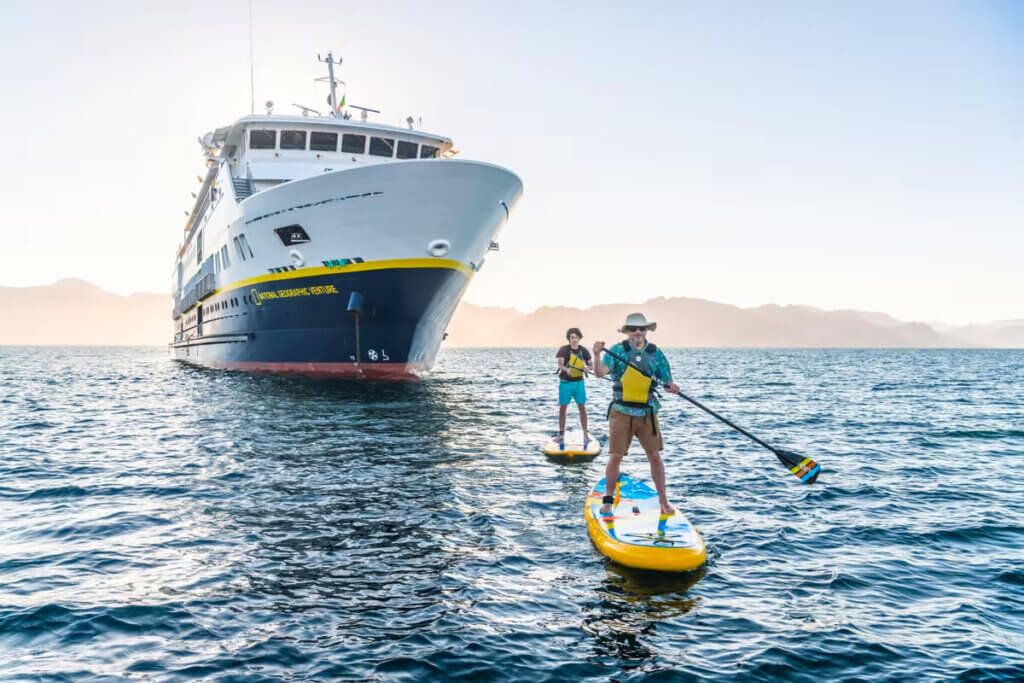
Baja California and the Sea of Cortez offer something genuinely rare in luxury travel: a wilderness experience with world-class wildlife, delivered on a short flight from the U.S., in a format small enough to feel personal. Whether you’re drawn by the prospect of a gray whale calf surfacing beside your panga, a sea lion pup spiraling past your mask at Los Islotes, or simply the idea of falling asleep to a sky unmarred by city light, this is a destination built for travelers who want their luxury measured in access and intimacy rather than square footage.
For the traveler who has already checked the obvious boxes — the Caribbean, the Mediterranean, the Alaskan Inside Passage — the Sea of Cortez is very often the trip that resets what “cruise” means altogether.
View Mexico / Baja California / Sea of Cortez cruise itineraries
Ready to reserve your Mexico small ship adventure cruise? Contact Sunstone Tours & Cruises toll-free at 1-888-815-5428 to book your cruise of a lifetime.